Pages

Showing posts with label Treatment. Show all posts

New Window Treatment Ideas From HGTV Dream Homes

Learn new stylish and functional ways to use window treatments and revitalize your decor with ideas from past HGTV Dream Homes.

Dramatic Drapes

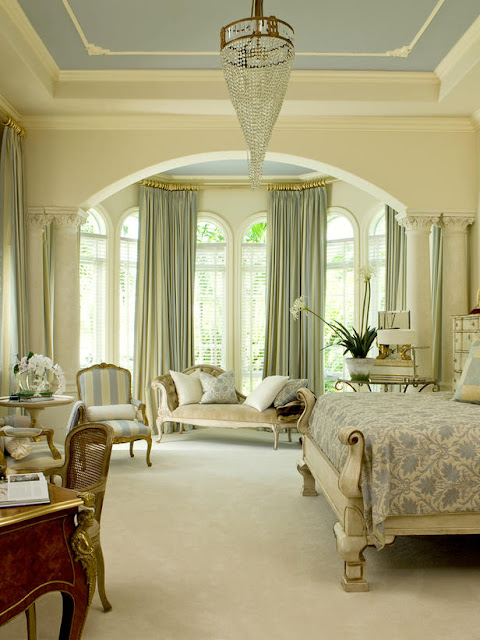
The longer the curtains, the more dramatic and elegant the design. In this master suite sheer loose linen drapes frame the queen size bed as well as the bay window. When trying to design a casual and more informal space, try using shorter curtains.

Bold Colors

This brightly painted kids' room designed for HGTV Dream Home 2010 is both colorful and lively. The rustic red walls scream high energy alongside the two-toned sliding curtains. Placed on a track, the drapes can be easily extended at night to provide privacy, as well as insulation on cooler nights.

Stylishly Unique

With an endless array of patterns and styles, you can be sure to find a curtain design that fits your personal decor. In HGTV Dream Home 2008, a striped fabric is used for the curtain trimming as well as the kids' overhead bed treatment. Dressed in a mixture of patterns and textures, this bedroom is youthful and fun.


Drapes Make a Decorative Divide

Curtains make great room dividers and can be adjusted to your preference. They can be pulled back with ties, pinned apart or simply allowed to hang freely. In this master suite the cream-colored curtains make the perfect divide between the bed and meditation area. Use them as a simple way to define different areas of your home.


Enhance the Details

Drapes are not just for windows. In this formal foyer the drapes enhance the architecture while making a stylish statement. Placed alongside the architectural posts, the flowy cream curtains create a dramatic entrance, leading you from the front door into the family room and kitchen.


Decorative Designs

Curtains can be extremely decorative. Use them to add a touch of personality to your space. Long curtains, such as these lightly patterned neutral fabrics, will add height and bring drama to your decor. Simplistically designed, this dining room is styled with handcrafted furnishings and neutral fabrics and accessories.

15 Easy Window Treatment Projects for Autumn 2013

What's one surefire way to make a room looked polished and finished?

Dress up the windows. Whether they are DIY treatments or store bought versions, drapes, shades, valances, or any of their cohorts will take your rooms from bland to wow.


Take plain white curtains up a notch with a simple flower embellishment. To create the rosettes, trace around a 3 inch diameter drinking glass on the flower fabric. Repeat until you have five same size circles per rosette. Cut out circles and fold into quarters. Hold all the quarter circles in your hand and stitch together with a needle and thread at the base of the flowers. Create the number of rosettes that you want and stitch them to a pair of curtain panels, alternating heights. Run a bead of fabric glue from the flower to the bottom of the curtain panel. Place a length of green yarn on the glue, wrapping it under the bottom edge of the panel and gluing to the back of the curtain. Cut leaf shapes from green cotton fabric and position next to the yarn. Sew a straight stitch down the center and around the edges to secure.


Put scraps to use as fresh window treatments. We used sheer scraps to create a soft, shimmery effect. Choose your fabrics and plot out the pattern for the panels on grid paper to scale. By using grid paper, you can determine the dimensions of each fabric piece you'll be cutting. Label each section according to the fabric used. We used seven different sheers to get this effect. Cut fabric and pin together in rows. Stitch the pieces into rows, then stitch the rows together. Sew a rod pocket and the side and bottom edges to finish.


Set your windows apart with dyed linen strips. Start with sheer white linen and cut into strips. Divide the strips into four or five groups. You'll dye each group a different shade. We created five different colors using red and yellow crafts paint. Mix 1 tablespoon of crafts paint to 1 gallon of water and stir. Test the dye on a scrap of linen. Experiment with colors and saturation levels before you dye your final strips. Once you're happy with the color, plunge a length of fabric into the mixture. Remove and hang to dry. Repeat until you're satisfied with the mix of colors. Iron the dry fabric to set the color. Line up the strips in alternating colors, then tie to a curtain rod. Cut the fabric strips to the desired length. (These were cut short to create a cafe curtain.)


Go geometric and paint a chevron design onto a plain shade. To make a chevron stripe, determine the center point of the fabric on the Roman shade and position the pattern for pleasing symmetry. We allowed for 4 inch stripes. Use a plastic artist's triangle tool (or create your own triangle shape out of cardboard) and pencil to trace lines onto the shade. Use a straightedge to make sure the chevron stripes are level. Tape above and below the pencil line with painter's tape. Repeat for each stripe. Use a brush or roller to paint on fabric paint. Remove the painter's tape and install the shade once the paint is dry.


Create custom marbleized fabric that starts with a design you create on paper. Click the link below to learn how to marbleize paper and then upload your design to a fabric printing service (we used Spoonflower), order your fabric, and sew it into basic drapes.


Made from a miniblind and midweight upholstery fabric, this Roman shade can be assembled in a matter of hours. First, lay the blind on your work surface with the front facing down. Set the length by adjusting the plug underneath the thick bottom slat according to the package instructions. Next, snip away only the strings that connect the slats on both sides. Maintain the slats at 7 inch intervals; snap off and remove the rest. Place the fabric facedown under the blind. Mark the fabric where it folds at the sides, top, and bottom of the slats. Remove the shade and press the fabric folds. Place the fabric under the shade, then glue the sides of the fabric to each slat and the top and bottom edges of the fabric to the top and bottom slats. Use clothespins to hold the fabric in place while it dries.


To create these pretty cafe curtains, purchase two 16x24 inch tea towels. Install curtain rods at your desired height. Attach ring clips to the top of the tea towels to hang them from the rod. If the towels hang past the windowsill, measure the fabric, cut off the excess, and hem the towels using a sewing machine or fusible web and an iron.


Add waves of color to plain white panels by progressively dyeing with two colors of acrylic crafts paint. We paired deep blue and teal. Dip the damp fabric into a solution of 1 tablespoon crafts paint per 1 gallon of water. Add more paint to the mixture and dip the lower portions of the curtain repeatedly to achieve an intense color.


To make a peacock-print valance like this one, start by cutting a 2x4 piece of wood to the width of your window. Buy enough fabric to extend 6 inches on either side and 4 inches longer than the desired length. Finish the hem and sides, and embellish with a fun fabric trim. Wrap fabric around the wood and staple into place. Attach the wood to the wall with screws or L brackets.


You can make these pretty curtains using solid color flat sheets. Cut each panel to twice the window width and 6 inches longer than the desired length. Sew a rod pocket along the top. Hem the panels to floor length. Make the ruffles by cutting strips of fabric twice the width of a panel by 4-1/2 inches, then sew a 1/2 inch hem. Sew a basting stitch along the raw edge. Gather the fabric to the width of the panel. Starting at the curtain's bottom hem, pin overlapping ruffles to the panel and stitch them into place. Attach the top ruffle upside down, right sides together, and flip over to hide the raw edge.


When curtain panels won't fit or simply aren't needed, use an easy sew valance like this one to add softness and color. Sew a rectangle to the window size, adding a rod pocket at the top. Stitch a length of wide ribbon on each end of the valance, 4-6 inches from the outer edge. Drape the ribbon over the top of the valance so there is a length of ribbon running down the back and the front of the valance. Stitch the ribbon into place and use each ribbon tail to tie up the fabric.


You can dress up purchased tab-top panels with a bit of trim attached to the edges. Or get a similar look by making your own panels. You can buy yardage at a fabrics store, but you can also shop for table coverings or linens in the kitchen, bedding, and bath section of your local department store. There you will often find discounted or discontinued fabric items that you can cut up and use as yardage.


Don't toss out curtains you love just because they don't fit your new windows or need to be replaced. Instead, cut and sew them into panel style window shades with rod pockets. Tension rods hold the shades in place and make them easy to change or remove. This trick also works to make outdated fabrics or drapery styles look trendy again.


For a simple update, give drapery panels a makeover with tiebacks. An easy to make tieback adds a polished look and a splash of the room's yellow accent color to this window treatment.


With a little ingenuity and basic sewing skills, you can get the look of custom made window treatments for way less. Start with a neutral drapery (maybe one you've had for years but now want to update) and sew a contrasting fabric to the bottom, measuring from the bottom edge of the window to the floor. Cover the seam with beaded trim or ribbon. This idea is great if you have recently moved and need to lengthen your old draperies to fit the scale of your new home.

2013 Bedroom Window Treatment Ideas from HGTV

Window treatments can set the tone of your bedroom's style. Check out these ideas to add color, pattern and drama to your space.


Serene Entrance 

Designer Troy Beasley placed white silk draperies at the bedroom's entrance instead of over the windows to avoid blocking the stunning city view. The white draperies and bedding offer a soothing environment, while pops of yellow bring life into the space.


Floor to Ceiling Luxury 

Designer Tracy Morris hung over the top, floor to ceiling draperies to cover up the large windows in this regal bedroom. The soothing blue color of the drapes is implemented in the ceiling treatment, bedding and furniture for a unified look. Gold accents enhance the luxurious feel of the space.


Dark, Soothing Color 

Using dark colors in a bedroom can make the space feel cluttered and small when used incorrectly, but these chocolate brown draperies set a soothing tone against the lavender walls of this contemporary bedroom. To bring some sparkle to the space, designer Joseph Pubillones hung a mirror above the bed.


Bold Pattern 

Bright colors, whimsical patterns and inviting accessories make visitors feel welcome in this guest bedroom designed by Erinn Valencich. The bold patterned, floor to ceiling window treatments stand out against the soft blue walls, making it the bedroom's statement piece.


Room Divider Drapes 

Draperies don't only have to cover up windows. Designer Vanessa DeLeon hung sheer gold draperies to separate the bedroom from the living room in this studio apartment. A curtain rod spanning the room's ceiling makes it easy to open and close the curtains.


Bedroom Focal Point 

The dramatic gold draperies create a focal point and spruce up the wall behind the bed. Designer Troy Beasley paired the draperies with an over-the-top velvet headboard to bring texture to the space. The two toned drapes give the illusion of a higher ceiling, which makes the room feel larger.


Dual Material Draperies 

Decorating your space with dual material draperies adds interest to a neutral space. In this guest bedroom, designer Ammie Kim chose a sheer material to cover the windows to allow natural light to stream in. A bold, velvet material on the bottom of the drapes anchors the space.


Tips for Window Treatment Design Ideas 2012

Window treatment design can really pull your room together. You might have very traditional furniture or you're just unable to paint the walls. However, window treatment design is your chance to really show off who you and what your design aesthetic is. Here are a few tips for window treatment design.

Add in layers. This will give warmth and dimension to your window treatment design. This is also the difference between just throwing up curtains and really getting a designer touch in your home. This doesn't mean that you have to use a lot of heavy fabric. You could try a lighter plaid Roman shade next to floral curtains. This could be perfect in a kid's room or you could also use it as a country touch in a living room. Fabric is a great place to add color and pattern in the room because it's not permanent or expensive.


Experiment with tiebacks. This is a simple way that you can incorporate your overall theme. It adds elegance and can tie into other metallic finishes for a subtle touch, but it will help your space to feel finished. It's also functional. You can find some of these items that are like hooks that will help curtains stay open in the daytime. You can also add decorative tassels. Another option would be to install doorknobs or try making your own hooks or use decorative corbels. This will be very oversized and dramatic so it is perfect for an elegant window treatment.


Highlight the shape of your window. You can do this a few different ways. You may have to have window treatments made specifically for your windows. A lot of modern homes have windows with special challenges. They focus on unique shapes. You really need to consider which windows actually need treatments and which windows don't. If you have really high ceilings some of your upper windows might not need coverings. You could do a decorative stencil around the window to highlight the archway. Then you could just use plain curtains on the lower windows to save money but still bring in fabric and privacy.


Sometimes less is more. It's easy to go over the top with your window treatments. One of the best design ideas is to just use a little bit of restraint. This will actually make your room look more elegant and formal. It will be easier to clean and less expensive to install. You might just want to do the exact opposite of what is going on with the walls. If you have patterned wallpaper then try using a solid color drape. If you have a solid paint color then try a patterned fabric to spruce up a boring wall.


Change up the length. If you want to go with an elegant window treatment then try a super long curtain. If you want something less formal than just cover up whatever part of the window that you need to for privacy. This will allow light to stream in and also use less fabric. Café curtains are bistro or country feeling so it is perfect for a kitchen or dining room.


Window Treatment design ideas 2012 : Easy Projects You Can Do

Here are some easy projects ideas that can be inspiring you to renew your window covered , i hope you like it , Enjoy !!
Unique window treatment ideas can give your room personality on a budget. For some of these projects you won't even have to know how to sew. You probably can't replace your furniture whenever a new design style hits. Changing out your curtains gives you the opportunity to give your room a different theme or feeling.


Flowy and Fabulous

You can dress up purchased tab-top panels with a bit of trim you attach to the edges. Or get a similar look by making your own panels. You can buy yardage at the fabrics store, but you can also shop for table coverings or linens in the kitchen, bedding, and bath section of your local department store. There you will often find discounted or discontinued fabric items that you can cut up and use as yardage.


Thrifty Fun Curtains 

Save money by using charming vintage tablecloths as window treatments. To make these cafe curtains, cut cloth to size, adding 1/2 inch to each raw edge for the hem. Sew a hem around the raw edges. Stitch or glue loops of ribbon to the top edge to hang the curtains. For a little bit of sparkle, place an adhesive jewel on top of each ribbon loop where it?s attached to the curtain.


Give Draperies a Second Chance 

With a little ingenuity and basic sewing skills, you can get the look of custom-made window treatments for way less. Start with a neutral drapery (maybe one you've had for years but now want to update) and sew a contrasting fabric to the bottom, measuring from the bottom edge of the window to the floor. Cover the seam with beaded trim or ribbon. This idea is great if you recently moved and need to lengthen your old draperies to fit the scale of your new home.


 Pretty Prints 

If dressing your window calls for more than one layer -- for decor as well as for privacy -- then lucky you. Take this opportunity to personalize a purchased shade using paint. You can cut out a pattern, use a stencil, or try a freehand design with paints in different shades for a personal style statement.


Dressed-Up Curtain Panels

A cottage-style room would look amazing with windows dressed in these flirty curtain panels. Start with purchased panels and add the ruffle yourself.


Get Length Savvy

Purchase sheer curtain panels in glitzy brown-gold, and then hang them from a curtain rod installed several inches above the top of the window so the panels barely brush the floor. For a more luxurious look, hang the panels low enough to pool slightly on the ground. A versatile bonus? Choosing neutral sheers allows you to switch the curtains from one room to another as the redecorating mood strikes.


Go Subtle with Pattern

Get away with daring patterned window treatments by choosing a muted color palette, like these canary- and burnt-yellow shades. The tone-on-tone style will get noticed but won't distract from the flashier pieces in the room that you've invested more money and thought into, such as a rug or sofa.


Accessorize with Tiebacks

Give drapery panels a makeover with tiebacks for an simple update. An easy-to-make tieback adds a final polish to this window treatment, and also adds a splash of the room?s yellow accent color to the window.


 Play Up the View 

Dress up a sunny bank of windows without losing the view with these valances. They're easy enough to stitch up, or simplify the process by using hem tape to finish the edges. You can mount the valances using a tension rod or by wrapping fabric around a small board and securing that to the window frame with screws.


Reuse Old Curtains

Don't toss out curtains you love just because they don't fit your new windows or need to be replaced. Instead, cut and sew them into panel-style window shades with rod pockets. Tension rods hold the shades in place and make them easy to change or remove. This trick also works to make outdated fabrics or drapery styles look trendy again.

2012 Bargain Window Treatment Ideas

Instantly transform simple store-bought panels into something special with these quick and easy window treatment ideas.
Designed by Elaine Koonce


Flower Style

Faux flowers find a new use on these panels. Randomly placed flowers add dramatic visual appeal to plain green window panels. For a look that's not as cohesive and a little more fun, choose a variety of faux florals for a flower patch panel.


Flower Style: Make It 

How to Make It
Go to a craft store and find faux flowers that fit the look you're going for.
Pop flower heads off the stems.
Arrange flower heads on a panel and glue in place with a hot-glue gun. 
Tip: Lay down protective covering on working surface to keep glue from leaking through.


Branching Out

Achieve a designer look at the fraction of the price with this creative design. Search your local fabric store for discount fabric that can be used to create window panels. Then put your creativity to the test by sketching out a leafy design that fits your style.


Branching Out: Make It 

How to Make It

For one large branch, trace out the pattern first with a white chalk.
Make three size leaves on card stock; cut out pattern.
Trace the leaves on the branch pattern.
Using acrylic or fabric paint, hand-paint branch and leaves.
Let dry. Use a cloth to wipe off excess chalk.


 Button Burst 

Fun and whimsical, this unique look is simple to duplicate. All you need are a handful of buttons and some creativity.


Button Burst: Make It 

How to Make It

Arrange the buttons in a pattern you like on the panel.
Using fabric glue, glue the buttons into place.
Lay flat to dry.


Sheer Elegance

Romanticize any room with this bold drapery that beckons the princess inside us all. A pretty two-tone effect adds visual interest but does not take away from the beautiful delicacy of the detailing in the sheers.


Sheer Elegance: Make It 

How to Make It

Make a cut at the top of the sheer, tear (do not cut across).
Fold over and iron, repeat.
Sew seam.
Fold sides over (twice) and iron and sew.
Sew the top of the sheer to the top of the panel.
Cut the bottom length 2 inches longer than the panel; iron, fold and hem.
Finish off with a diamond belt clip.


Say It with Stencils

These floor-length panels are great for a kids' playroom or bedroom. Not only will your little ones love seeing their names in big letters, but they can help make these easy treatments.


Say It with Stencils: Make It 

How to Make It

Purchase 9-inch oil-based board stencils.
Overlap boards so letters are at the desired distance apart.
Trace stencil with a pencil; remove the cardboard stencils.
Paint inside the drawn lines.


Blocked Beauty

From traditional to modern, this treatment is perfect for any decorating style. Sheer blocks allow some light into the room but do not take away from the privacy functionality of a solid panel.


Blocked Beauty: Make It 

How to Make It

Lay panels flat, then place three poster boards cut to 14 x 22 inches on top, making sure the distance between the three boards is even.
Use a white chalk to trace around the boards; remove boards.
Cut out squares.
Lay your sheer fabric over the holes, pin into place and cut the sheer to size.
Move the panel to an ironing board. Lay flat again and use iron-on adhesive to secure in place. (Make sure iron is on medium heat so you don't melt the sheer.)
Use 7/8-inch chocolate grosgrain ribbon to finish off front cuts and secure with a 3/4-inch iron-on adhesive.
Iron both front and back to help adhere the adhesive.


Top It with a Scarf 

Scarves are a great way to add color and texture to your treatment, yet still maintain a tailored look. If you're having trouble finding two of the same kind, opt for scarves that have similar patterns or colors.


Top It with a Scarf: Make It 

How to Make It
Purchase two women's dress scarves in patterns and colors that fit your decor.
Cut in half, hem.
Lay them over top of panel and pin in place.
Sew one at a time (bottoms scarf first).


Trim & Ribbon Treatment

You can take any pair of plain drapes and dress them up in a few easy steps. Because the panels are embellished only in thin stripes, the more detail the better. We chose to use several types of ribbon, buttons, and beaded trim for our treatment, but the list of embellishments is endless.


Trim & Ribbon Treatment: Make It 

How to Make It

Purchase several different ribbons, trims and buttons in the color combination of your choice.
Plan an arrangement of layers.
Measure and draw a line across the panel to line up the beaded trim. Continue to add the other layers above and below the center ribbon.
Use an iron-on adhesive for the ribbon and flat trims.
Use fabric glue for the smaller, round, and irregular shaped trims.
To complete the look, glue on buttons.


Ribbon Masterpiece

It's never been simpler to take an existing window panel and make it fabulous. If you are new to do-it-yourself projects, this embellished window treatment idea is perfect for you.


Ribbon Masterpiece: Make It 

How to Make It

Purchase three colors and sizes of ribbon.
Cut large ribbon to 8 inches, second size to 6 inches, and small to 4 inches.
Iron all ribbon in half.
Line up the three sizes together, pin in place and sew a quick stitch at top to secure.
Draw a line across the panel where embellishment is desired.
Pin ribbon blocks in place. Then stitch across the length of the ribbon to secure it to the panel (you can also use iron-on adhesive to make this a no-sew project).
Using an iron-on adhesive, secure medium and small ribbon in horizontal strips, to complete the look.